
Table of Contents:
A Note on Expertise: This guide is based on advanced system design principles for integrated living. We focus on creating reliable, purposeful connections between subsystems to enhance both daily convenience and foundational security, moving beyond standalone gadgets to a unified home brain.
Introduction: From Connected Devices to a Cohesive System
True modern safety and convenience are achieved when your home’s various systems stop working in isolation and start communicating. The next evolution of home protection is the adoption of smart security and a smart security system, which seamlessly integrate advanced technology and automation for enhanced peace of mind. Home automation and security integration is about creating a single, intelligent ecosystem where your lighting, climate, entertainment, and security protocols—including an automated security system and a range of smart products—work in concert. This goes beyond smart locks and cameras; it’s about making your entire home an active participant in your safety and comfort, forming the most advanced layer of a comprehensive home security system.
1. Integration: The Framework of Home Automation in a Responsive Home
Integration is the seamless communication between different devices and systems, often managed through a central hub or a unified platform.
- The Hub-Based Ecosystem: Devices connect to a central controller (like Savant, Control4, or a robust DIY hub like Home Assistant) using dedicated protocols like Z-Wave or Zigbee. This creates a stable, low-power network separate from your Wi-Fi, where the hub acts as the translator and brain.
- The Platform Unification: Systems from different brands (e.g., a security panel, a smart thermostat, motorized blinds) are linked via cloud-to-cloud APIs or local connections, allowing them to be controlled and automated within a single app interface. This integration enables the inclusion of third party devices and other devices—such as smart locks, bulbs, and thermostats—into the unified system, so all devices connected can be managed seamlessly through a single control panel.
- BGS Design Principle:“We approach integration with ‘purpose-first’ design. Every automated action must serve a clear goal: enhancing security, saving energy, or simplifying daily life. We avoid complexity for its own sake, ensuring the system feels intuitive, not overwhelming.”
2. Core Benefits: More Than the Sum of Its Parts
The synergy between automation and security delivers transformative advantages.
- Advanced Deterrence Through Lived-In Presence: Go beyond a single light on a timer. Systems can randomize lighting, adjust blinds, and even simulate TV glow in different rooms based on your “Away” schedule, creating an uncanny simulation of occupancy that is a powerful burglary deterrent. Outdoor cameras and video cameras further deter intruders by providing visible surveillance and capturing crucial evidence for law enforcement.
- Automated Safety Responses: In an emergency, predefined “scenes” execute instantly. A smoke detector trigger can unlock doors for firefighter entry, turn on all lights, shut down the HVAC to prevent smoke spread, and provide audio evacuation guidance through built-in speakers.
- Proactive Awareness & Convenience: Receive intelligent alerts. “Your garage door opened at 3 PM, but no one arrived through the front door.” “The basement water leak sensor has triggered—water shut-off valve engaged and lights are on.” Entry sensors provide real-time alerts for door or window openings, enhancing your awareness and control.
- Energy Efficiency & Management: Security sensors double as occupancy detectors. Motion sensors can turn off lights in empty rooms, and geofencing (using your phone’s location) can adjust the thermostat to an energy-saving mode when the last person leaves.
Selecting the right security equipment—including entry sensors, smoke detectors, video cameras, and outdoor cameras—is essential for building a comprehensive home automation and security system.
3. Common Features and Capabilities of Integrated Smart Home Devices
An integrated home can respond to commands, schedules, and real-time events.
| Category | Devices & Capabilities | Integrated Security/Automation Actions |
|---|---|---|
| Lighting Control | Smart switches, dimmers, bulbs. | “Away Mode” randomization; “Goodnight” scene turning off all lights; pathway lighting upon security system “Disarm” at night. |
| Climate & Comfort | Smart thermostats, HVAC controllers, motorized blinds. | Setback during “Away” mode; close blinds at sunset for privacy; open blinds upon morning “Disarm.” |
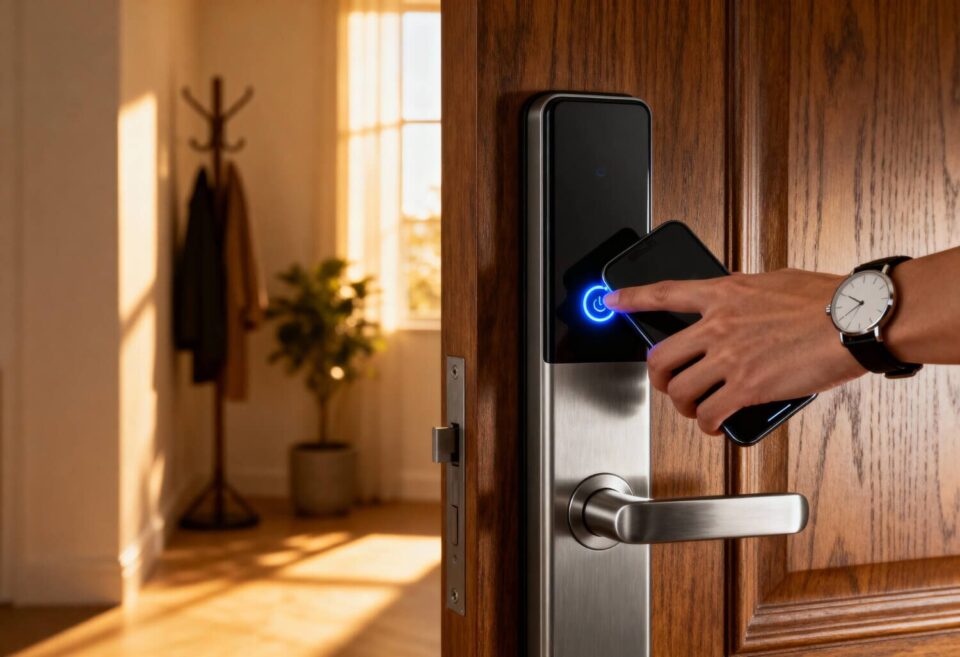
| Access & Awareness | Smart locks, garage controllers, IP cameras, abode app. | Unlock doors for approved guests/vendors; receive video alerts for specific people; close garage if left open; use the abode app for system control and remote access to devices. |
| Life Safety & Environmental | Smoke/CO detectors, leak sensors, freeze sensors. | Trigger full-home alert scenes, shut off water main, send prioritized alerts. |
| Whole-Home Management | Multi-room audio, intercoms, voice control. | Play alarm tones on all speakers; use intercom for room-to-room communication; arm system with voice command. |
You can choose to self monitor your system or opt for professional monitoring with a pro plan, which may include monthly fees for advanced features and 24/7 oversight.
Equipment packages start at competitive price points, and some devices support Bluetooth connection for local control without relying solely on Wi-Fi or internet.
Real-Time Notifications: Staying Informed and In Control
One of the most powerful features of a modern smart home security system is the ability to receive real-time notifications, keeping you informed and in control no matter where you are. With smart devices and smart home equipment integrated into your home automation system, you can receive instant alerts on your mobile device for any unexpected activity—whether it’s a smart garage door left open, a door unlocked, or motion detected by security sensors. These instant alerts allow you to take immediate action, such as remotely closing the garage door or locking the front door, directly from your phone. This level of connectivity ensures that your home security is always active, even when you’re away, and provides peace of mind that your property and loved ones are protected. Real-time notifications are a cornerstone of smart home automation, giving you the ability to monitor, manage, and respond to your security system and other smart home features from anywhere, at any time.
4. How to Set Up a Cohesive, Reliable System
A successful integration requires careful planning to ensure reliability and ease of use.
Start by evaluating your needs and researching available systems. Consider options like the SimpliSafe system and SimpliSafe equipment, which are known for their ease of installation and integration with smart home devices.
When selecting your platform, look for compatibility with popular brands such as Google Nest and Google Nest products. These devices, including cameras, thermostats, and displays, can be managed through dedicated apps and integrated into your home automation and security setup.
As you build out your system, create scenes and routines that automate daily tasks. For example, you can set up routines to control smart bulbs, lock or unlock your smart lock, start your smart coffee makers or coffee maker in the morning, and manage other smart devices throughout your home.
Including other smart devices in your setup allows for advanced automation routines, enabling seamless control and enhanced convenience across your entire smart home ecosystem.
A Phased Implementation Strategy:
- Define Your “Why”: List your top 3-5 automation goals (e.g., “I want my home to look lived-in when traveling,” “I want lights to guide me at night,” “I want instant alerts for water leaks”).
- Audit & Foundation: Ensure your core security system and home network (with robust, professional-grade Wi-Fi) are stable and capable of integration. This is the critical foundation.
- Choose Your Integration Path: Decide between a professional integrator’s hub (for whole-home, turn-key reliability) or a advanced DIY platform (for maximum flexibility with more technical hands-on requirements).
- Build Scenes and Routines: Start simple. Create a “Good Morning” scene that opens blinds and disarms the security system. Build a “Goodnight” scene that locks doors, arms the perimeter, and turns off lights.
- Thorough Testing: Test every scene and automation rule under real-world conditions. Verify that alerts are accurate and actions are reliable.
Energy Management: Efficiency as a Security Asset
Smart home automation isn’t just about convenience—it’s also a powerful tool for energy management and enhanced home security. By integrating smart thermostats, smart light bulbs, and other smart appliances into your security system, you can optimize your home’s energy use while making it safer. For example, automated lighting schedules can turn smart light bulbs on and off at strategic times, making your home appear occupied and deterring potential intruders. Smart thermostats can automatically adjust temperatures based on occupancy or time of day, reducing energy waste and lowering utility bills, while also minimizing risks like overheating or electrical fires. With smart home technology, you can monitor and control energy usage remotely, ensuring your home remains both secure and efficient—even when you’re not there. This seamless blend of energy management and home security is a hallmark of advanced smart home automation, delivering comfort, savings, and peace of mind.
5. Potential Risks, Limitations, and Strategic Mitigation
With greater connectivity comes a need for greater diligence.
- Cybersecurity & Privacy Exposure: Every connected device is a potential network entry point.
- Mitigation: Use a dedicated network for IoT devices, insist on devices with regular security updates, enable strong, unique passwords and multi-factor authentication everywhere. Professional systems offer more secure, closed protocols.
- System Complexity & Single Points of Failure: Over-complication can lead to user frustration. If the hub or internet fails, advanced automations may break.
- Mitigation: Design with simplicity in mind. Ensure critical security functions (alarm triggers, sensor monitoring) operate 100% independently on their own cellular backup. Use a professional-grade uninterruptible power supply (UPS) for the hub and network.
- Interoperability & Vendor Lock-in: Not all devices work together seamlessly. Choosing a proprietary ecosystem can limit future choices.
- Mitigation: Prioritize devices that use open, standard protocols like Z-Wave or Matter for better long-term compatibility. Work with a designer who plans for future expansion.
- BGS Advisory: “The greatest risk is a poorly planned system that becomes a daily nuisance. Our goal is to make the technology invisible—the home simply behaves as it should, enhancing security and life without requiring constant management or troubleshooting.”
Smart Home Platforms: The Role of Google Home and Beyond
Choosing the right smart home platform is essential for creating a truly integrated and responsive home automation system. Platforms like Google Home serve as the central hub, connecting a wide range of smart devices—from smart lighting and smart plugs to security cameras and door locks—into a single, easy-to-control ecosystem. With Google Home, you can use voice commands to activate routines, adjust smart lighting, or check the status of your security system, all without lifting a finger. This level of smart home control extends to other platforms as well, such as Amazon Alexa and Apple HomeKit, each offering robust compatibility with multiple devices and third party equipment. By selecting a platform that works seamlessly with your security system and other smart home automation devices, you gain full control over your environment, enhancing both convenience and security. Whether you’re locking doors, setting the thermostat, or activating “movie night” routines, smart home platforms make it simple to manage your home’s features from a single interface, ensuring your smart home is always working for you.
Conclusion: The Intelligent Home as a Home Security Partner
Home automation and security integration represents the pinnacle of proactive living. It transforms your home from a collection of passive structures and devices into an active, responsive environment that anticipates needs and responds to threats. This intelligent layer doesn’t replace a core security system; it amplifies its effectiveness and deeply embeds it into the fabric of daily life.
At BGS Security Division, we specialize in designing these cohesive ecosystems. We navigate the technical complexities to deliver a system where every automated action has purpose, every integration is rock-solid, and the result is unparalleled simplicity, safety, and control.
Ready to design a home that works as one intelligent system?
Schedule a whole-home integration consultation with a BGS system designer. We’ll discuss your vision, audit your current technology, and map out a strategic plan to unify your security, comfort, and convenience into a single, effortless experience.