
Table of Contents:
Business Security Systems: Beyond the Lock and Key – Is Your Business Truly Protected in 2026?
Business security systems are the backbone of modern commercial protection in 2026. This guide is for business owners, managers, and decision-makers seeking to protect their commercial property in 2026. With rising threats and rapid technological change, understanding modern business security systems is more important than ever.
Imagine this: It’s 3 AM. Your silent alarm triggers. A live feed pops up on a monitoring operator’s screen, showing not just a shadowy figure in your warehouse, but their exact path, flagged by AI as “unauthorized motion.” Before they can touch a single pallet, an automated voice warns them over on-site speakers, lights blaze on, and police are already dispatched with real-time video. This isn’t science fiction; it’s modern business security systems in action.
For today’s business leader, security is no longer a simple expense line—it’s a critical strategic pillar. It’s about more than preventing theft; it’s about safeguarding your assets, ensuring employee safety, protecting sensitive data, and preserving your hard-earned reputation. A single breach can mean devastating financial loss, operational downtime, and eroded customer trust.
A business security system is a coordinated set of technologies and protocols designed to protect a business’s physical premises, assets, personnel, and data from threats such as theft, vandalism, fire, and unauthorized access. A commercial security solution refers to a tailored package of these systems and services, integrated to address the unique needs of a commercial environment. These solutions typically combine multiple components—such as access control, video surveillance, intrusion detection, and environmental monitoring—into a unified defense strategy.
This comprehensive guide cuts through the complexity. We’ll move beyond basic burglar alarms to explore the integrated, intelligent ecosystems that defend modern businesses. An alarm system is a critical component of comprehensive business security solutions, providing essential detection, alerts, and integration with other security measures to protect assets and ensure safety. You’ll gain the knowledge to make informed decisions, whether you run a compact retail shop, a bustling restaurant, a sprawling warehouse, a corporate office, or other commercial properties.
In this essential pillar article, you will learn:
- The Security Ecosystem: A breakdown of the core Types of Business Security Systems and how they work together.
- The Strategic ROI: The multifaceted Benefits of a Business Security System—from crime deterrence to insurance savings and beyond.
- Choosing Your Shield: The crucial Factors to Consider When Choosing a System tailored to your unique business.
- The Modern Toolkit: An exploration of Common & Advanced Features in today’s solutions.
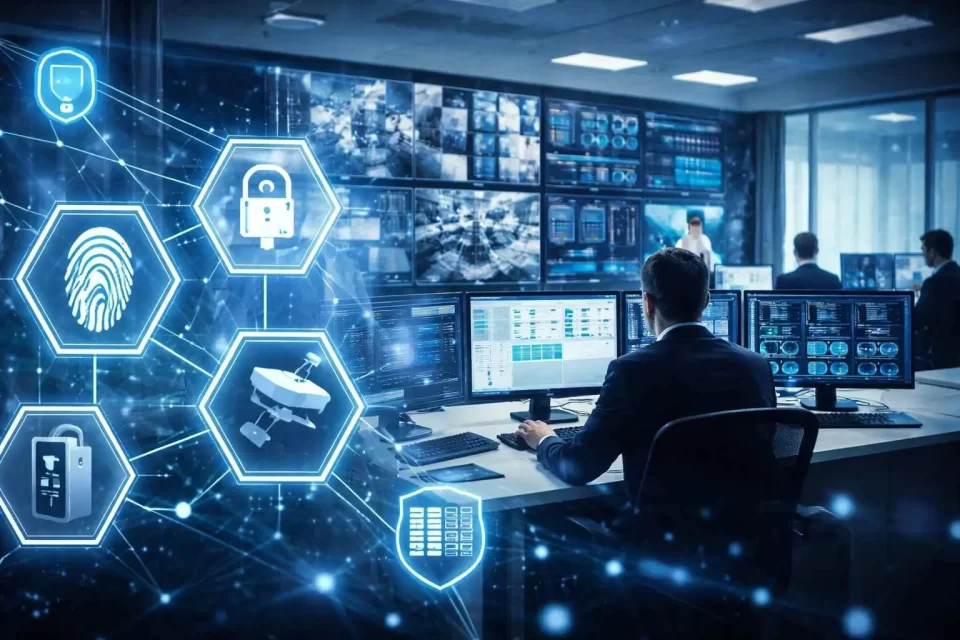
- The Future of Security: Trending Technologies like AI, cloud integration, and biometrics that are reshaping the landscape.
Stop viewing security as a cost center. Start building it as your business’s silent, steadfast guardian.
1. The Security Ecosystem: Types of Business Security Systems
Modern business protection relies on layered, integrated systems. Understanding the core components is your first step.
What Is a Business Security System?
A business security system is a collection of devices and technologies—such as cameras, alarms, sensors, and access controls—designed to detect, deter, and respond to threats against a business’s physical and digital assets.
What Is a Commercial Security Solution?
A commercial security solution is a customized package that integrates various business security system components to address the specific risks and requirements of a commercial property. It often includes professional monitoring, system integration, and ongoing support.
Access Control Systems
- Definition: The digital gatekeeper. These systems manage who can enter your building, specific rooms, or areas, and when.
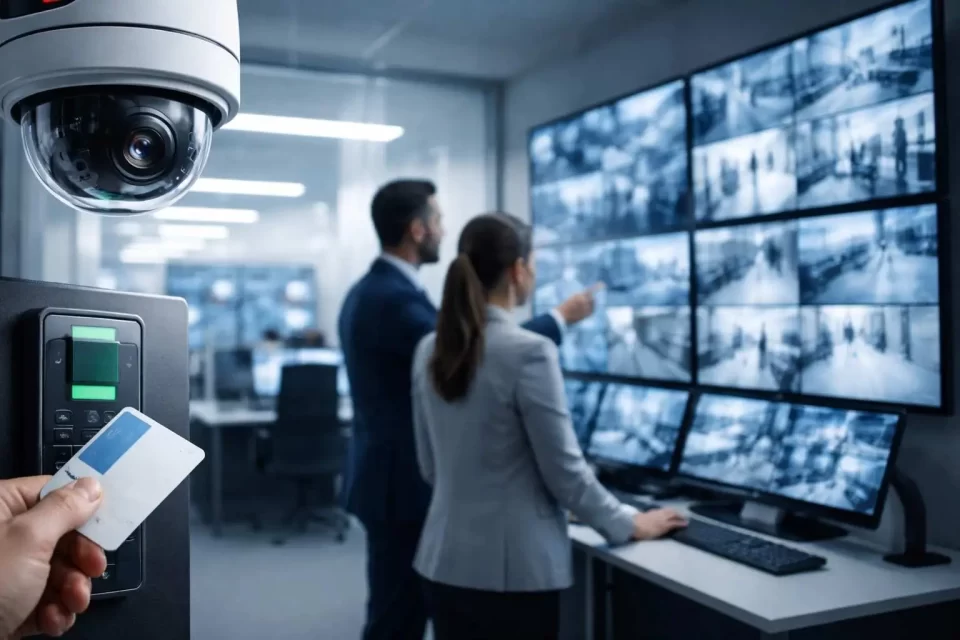
- How It Works: They replace traditional keys (which can be copied or lost) with key cards, fobs, PIN codes, or biometric scans (fingerprint, facial recognition).
- Benefits: Allows granular control, trackable entry logs, and instant revocation of access.
Video Surveillance (CCTV)
- Definition: The ever-watchful eyes. Modern systems feature high-definition, often IP-based security cameras that provide live monitoring and recorded evidence.
- Key Advancements:
- Cloud storage
- Low-light/night vision
- Pan-Tilt-Zoom (PTZ) capabilities
- AI-powered analytics (e.g., people counting, loitering detection, license plate recognition)
- Continuous recording for 24/7 footage
- Ethernet cable is commonly used to connect IP-based cameras, especially in PoE (Power over Ethernet) setups for reliable data transfer and simplified installation. (PoE means Power over Ethernet, allowing both power and data to be delivered over a single cable.)
- Wireless indoor camera options are also available for flexible and easy installation in various business environments.
Intrusion Detection & Alarm Systems
- Definition: The core of perimeter and interior defense.
- Components: Sensors on doors and windows, motion detectors, and glass-break sensors.
- Response: When breached, they trigger a loud local alarm and, if professionally monitored, alert a 24/7 security center to dispatch emergency services.
Environmental Monitoring
- Definition: Protection against non-human threats.
- Sensors for: Fire, smoke, heat, carbon monoxide, flooding, and temperature spikes (crucial for server rooms or restaurants), as well as fire alarms for integrated emergency response.
- Benefit: Early detection can prevent catastrophic property damage and business interruption.
Cybersecurity Integration (The Critical Link)
- Definition: As physical systems become networked (IoT), they are potential cyber targets.
- Best Practices: Secure these networks, use strong encryption, and ensure your physical security provider follows rigorous cybersecurity protocols to prevent digital breaches of your physical defenses.
Summary Table: Core Components of Business Security Systems
| Component | Purpose | Key Features/Technologies |
| Access Control | Manage entry/exit | Key cards, biometrics, PINs |
| Video Surveillance | Monitor and record activity | HD cameras, cloud storage, AI analytics |
| Intrusion Detection | Detect unauthorized access | Door/window sensors, alarms, monitoring |
| Environmental Monitoring | Detect fire, gas, flooding, etc. | Smoke/CO sensors, temperature alerts |
| Cybersecurity Integration | Protect networked security devices | Encryption, secure protocols, IT support |
Commercial security solutions are tailored, integrated packages that combine these components to address the unique needs of commercial environments.
2. The Strategic ROI: Benefits of a Business Security System
The investment pays dividends across your entire operation. Most businesses, regardless of size, can benefit from these advantages.
Key Benefits
- Crime Deterrence & Loss Prevention: Visible cameras and access control are powerful deterrents against theft, vandalism, and unauthorized entry, directly protecting inventory, equipment, and cash.
- Enhanced Employee & Customer Safety: Creating a secure environment boosts morale, reduces liability, and makes customers feel safe. Features like well-lit parking lot cameras and panic buttons are invaluable. Fast response times from monitoring services are critical for ensuring safety during emergencies.
- Operational Efficiency & Insight: Modern systems provide business intelligence. Access logs show traffic patterns, people-counting analytics optimize staffing, and video audits can improve customer service or warehouse workflows. Tailored solutions for business customers ensure these features meet the unique needs of each operation.
- Reduced Insurance Premiums: Many business insurance providers offer significant discounts (often 5-20% or more) for professionally monitored security, fire, and sprinkler systems, as they substantially lower risk.
- Remote Monitoring & Management: Owners and managers can view live camera feeds, lock/unlock doors, and receive incident alerts from anywhere via smartphone, providing peace of mind and control 24/7. Cellular backup ensures system reliability even during internet outages, so your security remains active at all times.
- Evidence & Liability Protection: High-definition video provides irrefutable evidence in the event of a crime, internal dispute, or fraudulent liability claim (like slip-and-fall incidents), protecting the business financially.
- Regulatory Compliance: For many industries (e.g., healthcare, finance, data centers), specific security measures like access logs, audit trails, and video retention are required for compliance with regulations like HIPAA (Health Insurance Portability and Accountability Act) or PCI-DSS (Payment Card Industry Data Security Standard).
3. Choosing Your Shield: Key Factors to Consider
Selecting the right system requires a clear assessment of your business’s unique profile.
1. Assess Your Business Type & Size
- Security needs vary widely between different types of commercial buildings and commercial properties.
- For example, a retail store has different needs (theft prevention, customer safety) than a warehouse (perimeter security, asset tracking) or a tech office (data center access, after-hours monitoring).
- Larger businesses, such as multi-office organizations or warehouses, may require more advanced or scalable solutions.
- For smaller operations, small business security systems offer tailored options designed for reliability, ease of installation, and effective monitoring.
2. Identify Primary Risks & Vulnerabilities
- Conduct a risk assessment.
- Is your biggest threat external burglary, internal theft, vandalism, fire, or data breach?
- Prioritize systems that target your highest risks.
3. Consider Scalability & Integration
- Choose a system that can grow with you.
- Can you easily add cameras or new access points?
- Does it integrate with your existing tools (e.g., POS system, HR software) or building management systems?
4. Decide on Monitoring: Professional vs. Self-Monitoring
- Professional 24/7 monitoring: Ensures a trained team responds to every alarm, even when you’re unavailable.
- Self-monitoring: Relies on key personnel to respond to smartphone alerts—a potential gap in coverage.
5. Evaluate Installation & Maintenance
- Consider the disruption and cost.
- Wireless systems offer easier installation.
- For businesses seeking flexibility, do it yourself installation options are available, allowing you to set up and manage your own system.
- Clarify who handles ongoing maintenance, repairs, and software updates.
6. Calculate Total Cost of Ownership (TCO)
- Look beyond upfront equipment costs.
- Evaluate the cost of security equipment as well as installation, monthly monitoring fees, maintenance, cloud storage subscriptions, and potential future upgrades.
4. The Modern Toolkit: Common Features of Advanced Systems
Today’s systems offer capabilities far beyond simple recording and alarming.
Mobile App Management
- The central hub is now your phone or tablet for remote arming/disarming, live video viewing, and access management.
AI & Smart Analytics
- Software can now analyze video feeds to identify specific behaviors: detecting unattended bags, flagging crowd formation, identifying when a person enters a restricted zone, or differentiating between a human and a stray animal.
Cloud-Based Platforms
- Cloud storage offers off-site, secure video backup immune to on-premise damage or tampering.
- Enables seamless remote access and easier system scalability.
- Reliable Wi-Fi connectivity is crucial for seamless remote access, system integration, and continuous monitoring.
Integrated Incident Response
- When an alarm triggers, the system can execute a pre-programmed sequence: unlock specific doors for egress, flash lights, play a warning siren, and send video clips with the alarm dispatch.
Cybersecurity Hardening
- Features like end-to-end encryption, multi-factor authentication (MFA), regular security patches, and secure VPNs are now essential to protect the system itself from hacking.
Table: DIY vs. Professional Security Systems
| Feature/Aspect | DIY Security System | Professional Security System |
| Installation | Self-installed, flexible | Installed by professionals |
| Monitoring | Self or optional professional monitoring | 24/7 professional monitoring |
| Cost | Lower upfront, no long-term contracts | Higher upfront, ongoing fees |
| Scalability | Easy to add/remove devices | Scalable, often requires pro support |
| Customization | Highly customizable | Customizable, but may be less flexible |
| Support | Limited, often online | Full support and maintenance |
| Advanced Features | Increasingly available | Standard, often more robust |
Security experts recommend evaluating these advanced features to ensure your business security systems meet both current and future needs.
5. The Future Is Now: Trending Technologies
The frontier of business security is intelligent, proactive, and deeply integrated.
Artificial Intelligence (AI) & Machine Learning
- Moving from simple motion detection to predictive analytics.
- Systems can learn normal patterns of activity and flag true anomalies, drastically reducing false alarms and identifying subtle threats.
Biometric Access Control
- The rise of facial recognition, fingerprint, and even iris scanners offers a higher level of security than cards or PINs, which can be shared, stolen, or forgotten.
Unified Security Platforms
- The shift towards single-pane-of-glass software that unifies video surveillance, access control, intrusion alarms, and communications into one intuitive interface for streamlined management and response.
Cybersecurity Convergence
- The most critical trend is the formal merging of physical security and IT security teams and strategies.
- Protecting the network that runs your cameras and door controllers is as important as the devices themselves.
Some of the most innovative business security technologies have been featured in reputable publications such as the New York Times, highlighting their industry impact.
Empowering on a Budget: DIY Security and Affordable Equipment
For many small businesses and startups, the idea of investing in a comprehensive security system can feel out of reach. But thanks to the rapid evolution of DIY security solutions, robust protection is now more accessible—and affordable—than ever.
Benefits of DIY Security
- DIY security systems empower business owners to take control of their security measures without the need for costly professional installation or long-term contracts.
- Designed with flexibility in mind, you can build a custom system that fits your specific security requirements.
Affordable Equipment Options
- Wireless devices like Google Nest cams and Lorex cameras offer high-quality video surveillance at a reasonable price, making it easy to monitor your business’s most vulnerable areas, from the parking lot to the back office.
- Motion detectors, window sensors, and smart locks can be added as needed, providing advanced security features without breaking the bank.
- Many systems are available with no hidden fees, and you can avoid being locked into long-term contracts.
- Cloud storage options are also available, offering secure, off-site video backup that’s often more cost-effective than traditional local recording.
Choosing the Right DIY System
- DIY systems offer a range of flexible monitoring plans. You can opt for self monitoring, receiving instant alerts about suspicious activity directly to your smartphone or tablet.
- For added peace of mind, some providers offer professional monitoring services, where a dedicated monitoring center can quickly notify the proper authorities if an alarm is triggered.
- Advanced security features are no longer reserved for large enterprises. Many affordable options now include active guard outdoor protection, facial recognition, and even intruder intervention features.
- Selecting the right DIY security system starts with a clear assessment of your business’s unique needs. Do you need an outdoor camera to cover your parking lot? Are smart locks or entry sensors a priority for your storefront? By focusing on your specific security requirements, you can create a custom system that delivers maximum protection at a reasonable price.
Many businesses—both small and growing—have found success with DIY security solutions. With the right equipment options and monitoring plan, you can safeguard your assets, employees, and reputation without stretching your budget. Whether you’re looking for a simple setup or a more advanced system with features like cloud storage and facial recognition, there are affordable options to suit every business.
In short, DIY security systems offer small businesses a powerful combination of flexibility, affordability, and peace of mind. By leveraging the latest wireless devices, smart technology, and transparent pricing, you can protect your business with confidence—no matter your size or budget.
Securing Your Foundation
A robust business security system is not a commodity purchase; it’s a strategic investment in your company’s continuity, reputation, and future growth. By understanding the types, benefits, and key considerations, you move from being a passive potential victim to an active, informed defender of your enterprise.
The next step is to engage with reputable security integrators who can translate your specific business risks into a tailored, layered security solution. Begin your journey by auditing your vulnerabilities today.
Ready to transform this knowledge into your tailored security strategy? Understanding the landscape is the first critical step; implementing the right solution is what solidifies your business’s future. The team at BGS Security Division specializes in translating complex security concepts into practical, integrated systems that protect your unique operations. Schedule a free, no-obligation consultation with a BGS security expert today. We’ll conduct a thorough assessment of your premises and risks to design a comprehensive security ecosystem that gives you true peace of mind, allowing you to focus on what you do best—growing your business.